CNC Machining Materials

Find the right metal or engineering plastic for your precision parts. Explore material grades, machining considerations and applications, with a clear path from material selection to verified production.

56 Materials

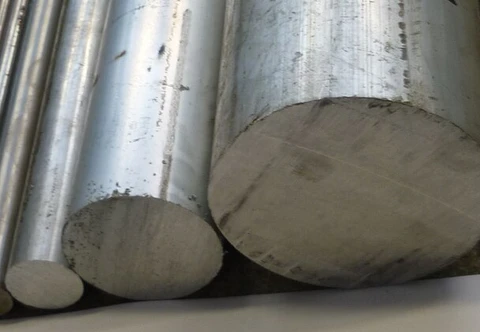
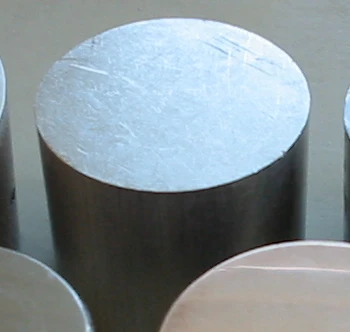
Short cylindrical metal blank with a bright sawn end face

Aluminum 6061-T6

Material
MetalAluminum
Short cylindrical metal blank with a bright sawn end face

Aluminum 6061-T651

Material
MetalAluminum
Short cylindrical metal blank with a bright sawn end face

Aluminum 7075-T6

Material
MetalAluminum
Short cylindrical metal blank with a bright sawn end face

Aluminum 7075-T651

Material
MetalAluminum
Short cylindrical metal blank with a bright sawn end face

Aluminum 2024-T3

Material
MetalAluminum
Short cylindrical metal blank with a bright sawn end face

Aluminum 5083

Material
MetalAluminum
Short cylindrical metal blank with a bright sawn end face

Aluminum 6063

Material
MetalAluminum
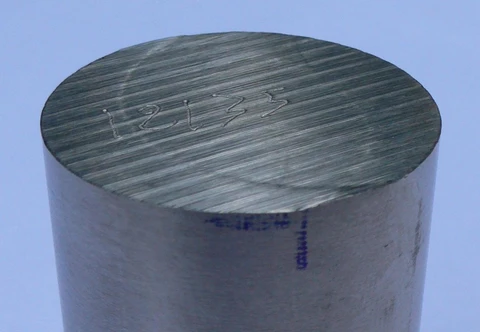
Round metal stock showing solid circular cut ends

Stainless Steel 303

Material
MetalStainless Steel
Round metal stock showing solid circular cut ends

Stainless Steel 304 / 304L

Material
MetalStainless Steel
Round metal stock showing solid circular cut ends

Stainless Steel 316L

Material
MetalStainless Steel
Round metal stock showing solid circular cut ends

Stainless Steel 316LVM

Material
MetalStainless Steel
Round metal stock showing solid circular cut ends

Stainless Steel 17-4PH

Material
MetalStainless Steel
Round metal stock showing solid circular cut ends

Stainless Steel 15-5PH

Material
MetalStainless Steel
Round metal stock showing solid circular cut ends

Stainless Steel 440C

Material
MetalStainless Steel
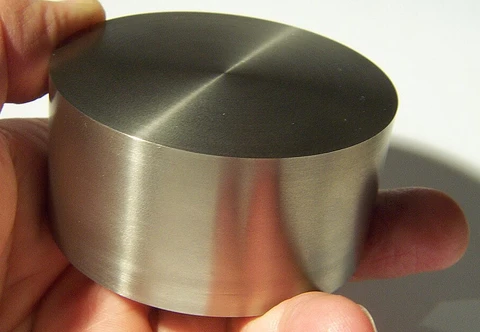
A short titanium cylinder held in a hand, with a flat circular end and straight sides

Titanium Grade 2

Material
MetalTitanium
A short titanium cylinder held in a hand, with a flat circular end and straight sides

Titanium Grade 5 / Ti-6Al-4V

Material
MetalTitanium
A short titanium cylinder held in a hand, with a flat circular end and straight sides

Titanium Grade 23 / Ti-6Al-4V ELI

Material
MetalTitanium
Round metal stock showing solid circular cut ends

Alloy Steel 4140

Material
MetalAlloy Steel
Round metal stock showing solid circular cut ends

Alloy Steel 4340

Material
MetalAlloy Steel
Cylindrical Inconel stock with a visible cut end face

INCONEL 718

Material
MetalNickel Alloy
Cylindrical Inconel stock with a visible cut end face

INCONEL 625

Material
MetalNickel Alloy
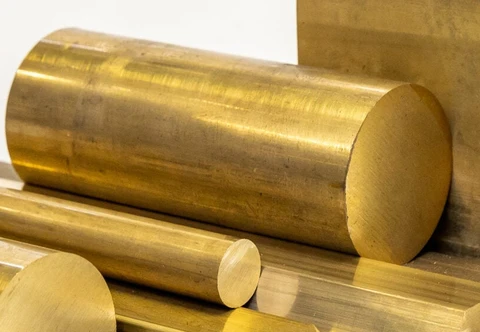
A solid brass cylinder with a circular cut face and visible machining lines

Copper C101 OFHC / C10100 OFE

Material
MetalCopper
A solid brass cylinder with a circular cut face and visible machining lines

Copper C102 OFHC / C10200

Material
MetalCopper
A solid brass cylinder with a circular cut face and visible machining lines

Copper C11000

Material
MetalCopper
A solid brass cylinder with a circular cut face and visible machining lines

Brass C36000

Material
MetalBrass
Round metal stock showing solid circular cut ends

Carbon Steel 1018

Material
MetalCarbon Steel
Round metal stock showing solid circular cut ends

Carbon Steel 1045

Material
MetalCarbon Steel
Round metal stock showing solid circular cut ends

Free-Machining Steel 1215

Material
MetalFree-Machining Steel
Round metal stock showing solid circular cut ends

Free-Machining Steel 12L14

Material
MetalFree-Machining Steel
Round metal stock showing solid circular cut ends

Tool Steel A2

Material
MetalTool Steel
Round metal stock showing solid circular cut ends

Tool Steel D2

Material
MetalTool Steel
Round metal stock showing solid circular cut ends

Tool Steel H13

Material
MetalTool Steel
Round metal stock showing solid circular cut ends

Mold Steel P20

Material
MetalTool Steel
A solid brass cylinder with a circular cut face and visible machining lines

Bearing Bronze C93200

Material
MetalBronze
Round metal stock showing solid circular cut ends

Gray Cast Iron / Continuous-Cast Bar

Material
MetalCast Iron
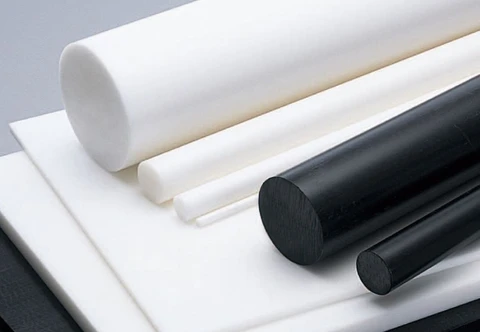
White and black polymer round stock with solid circular ends

PEEK

Material
PlasticPEEK
White and black polymer round stock with solid circular ends

PEEK (Medical Grade)

Material
PlasticPEEK
White and black polymer round stock with solid circular ends

PTFE

Material
PlasticPTFE
White and black polymer round stock with solid circular ends

PCTFE

Material
PlasticPCTFE
White and black polymer round stock with solid circular ends

POM-C (Acetal)

Material
PlasticAcetal
White and black polymer round stock with solid circular ends

ESD-Safe POM

Material
PlasticAcetal
White and black polymer round stock with solid circular ends

Nylon PA 6

Material
PlasticNylon
White and black polymer round stock with solid circular ends

PPSU

Material
PlasticPPSU
White and black polymer round stock with solid circular ends

PEI (Ultem)

Material
PlasticPEI
White and black polymer round stock with solid circular ends

UHMWPE

Material
PlasticPolyethylene
White and black polymer round stock with solid circular ends

Polycarbonate (PC)

Material
PlasticPolycarbonate
White and black polymer round stock with solid circular ends

Nylon / PA 66

Material
PlasticNylon
White and black polymer round stock with solid circular ends

POM-H / Acetal Homopolymer

Material
PlasticAcetal
White and black polymer round stock with solid circular ends

ABS

Material
PlasticABS
White and black polymer round stock with solid circular ends

Acrylic / PMMA

Material
PlasticAcrylic
White and black polymer round stock with solid circular ends

PET / PET-P

Material
PlasticPolyester
White and black polymer round stock with solid circular ends

PBT

Material
PlasticPolyester
White and black polymer round stock with solid circular ends

PPS

Material
PlasticPPS
White and black polymer round stock with solid circular ends

HDPE

Material
PlasticPolyethylene
White and black polymer round stock with solid circular ends

Polypropylene / PP

Material
PlasticPolypropylene
White and black polymer round stock with solid circular ends

Rigid PVC / PVC-U

Material
PlasticPVC

Considerations When Choosing Materials

The best CNC machining material meets the part's functional requirements and supports a stable manufacturing process. Review these six factors before fixing the grade on your drawing.

Strength And Weight

Start with load, stiffness, fatigue and impact requirements. Lightweight aluminum suits many housings; titanium or high-strength grades may be needed for more demanding loads.

Operating Environment

Review moisture, chemicals, corrosion, temperature and cleaning cycles together. The material must remain suitable throughout the part's expected service life.

Tolerances And Stability

Account for residual stress, thermal expansion, plastic moisture uptake and creep. Thin walls, deep pockets and close fits can make stock condition as important as the grade.

Machinability And Total Cost

Compare stock cost with cutting time, tool wear, material yield and inspection effort. A low raw-material price does not necessarily produce the lowest finished-part cost.

Finishes And Treatments

Check anodizing, passivation, coatings and heat-treatment compatibility. Plan dimensional allowances, masking and treatment order before the drawing is released.

Supply And Documentation

Specify the grade, temper, stock form and required records. Confirm sourcing lead time, traceability, composition restrictions and any customer-approved alternatives.

Industry-Specific Material Applications

Application requirements drive the material choice. These examples connect common CNC machining materials with the component functions and engineering checks that matter in each industry.

CNC Machining Material Applications By Industry
IndustryMaterials To ConsiderTypical ComponentsKey Requirements
Semiconductor Equipment6061 Aluminum, 316L Stainless Steel, PEEKChamber hardware, precision motion parts and insulatorsVacuum compatibility, outgassing, cleanliness and sealing surfaces
Aerospace7075 Aluminum, Ti-6Al-4V, INCONEL 718Loaded brackets, lightweight hardware and high-temperature fittingsSpecified alloy and temper, fatigue requirements and heat traceability
Medical Equipment316L Stainless Steel, PEEK, Specified Titanium GradesInstrument components, fluid-handling parts and equipment hardwareGrade-specific qualification, cleaning, sterilization and traceability
Robotics And Automation6061 Aluminum, 17-4PH, POM-C, NylonJoint housings, shafts, bushings and wear guidesWeight, stiffness, wear, mating fits and repeat-build consistency
Automotive And MobilityAluminum, Stainless Steel, Brass, Engineering PlasticsSensor bodies, connectors, brackets and mechanical interfacesEnvironment, material restrictions, fatigue and production approval
Electronics And EnergyC11000 Copper, Aluminum, PEEK, PTFEConductive components, heat-transfer parts and electrical insulatorsConductivity, dielectric performance and service temperature

Our Material Quality Check System

Material quality control includes specification review, incoming inspection, required material testing and heat or batch traceability. Material certificates and inspection records are checked against the drawing and purchase order before finished parts are packed for shipment.

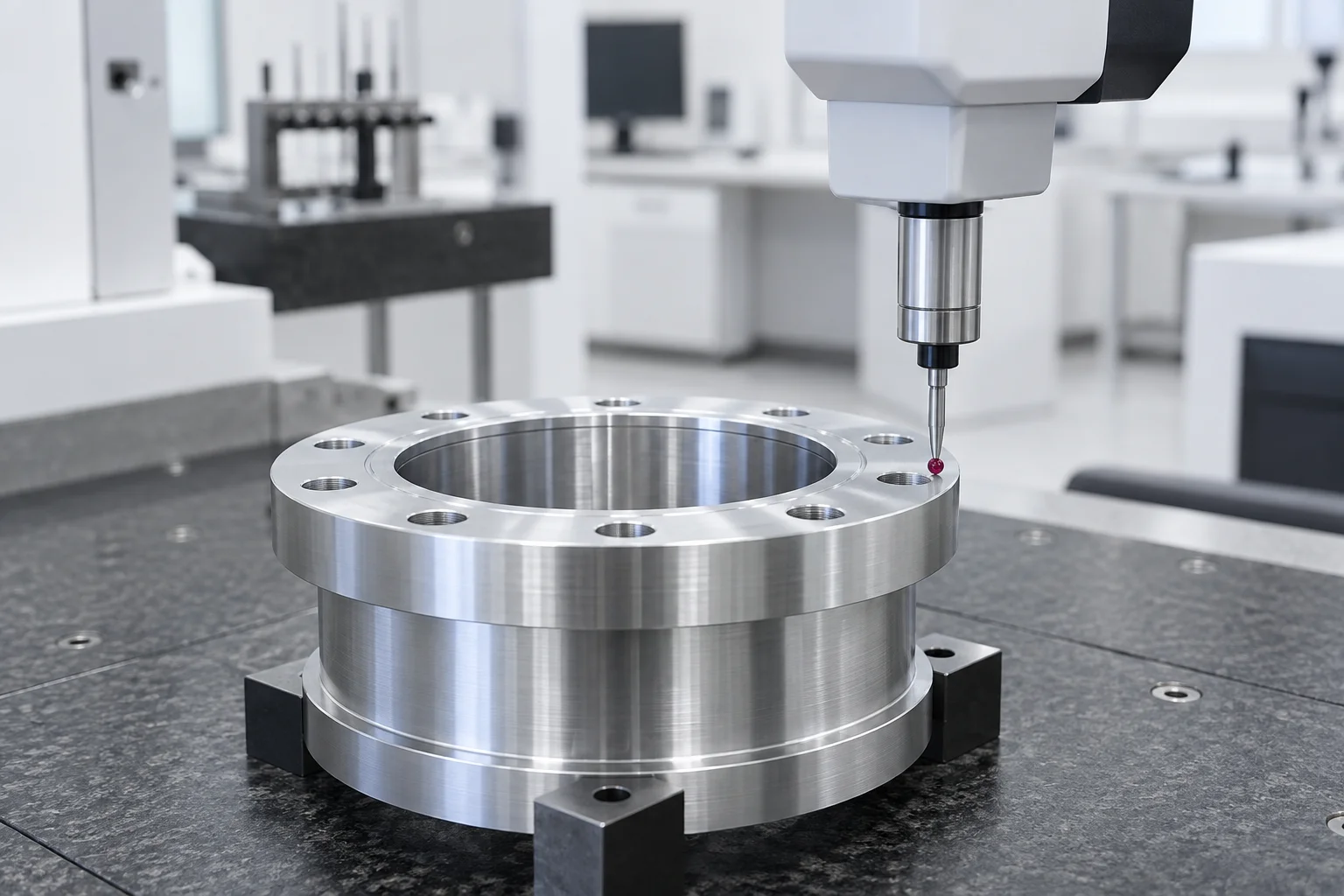
Precision measurement of a machined metal component
  1. 01

    Material Specification Review

    Confirm the material grade, temper or heat-treatment condition, stock form and procurement standard against the drawing and purchase order. Identify the material certificates and test reports required for the production batch.

    Drawing And Material Specification
  2. 02

    Incoming Material Inspection

    Check stock markings, dimensions and surface condition against the purchase order. Review the supplier material certificate for the specified grade and condition, and record the inspection results before material is used in machining.

    Incoming Inspection And Material Certificate
  3. 03

    Material Identification And Testing

    Where specified, verify material composition, hardness or other properties using the agreed test method and acceptance criteria. Confirm the testing responsibility and laboratory requirements before material procurement.

    Specified Material Test Reports
  4. 04

    Material Lot Traceability

    Link the supplier heat or batch number to allocated stock, cut blanks and the production work order. Maintain the identification required to trace finished components to the corresponding material certificate.

    Heat / Batch Identification Records
  5. 05

    Final Inspection And Documentation

    Review finished-part inspection results, material certificates and specified heat-treatment or surface-treatment records. Identify and segregate nonconforming parts, and resolve discrepancies before packaging and shipment.

    Inspection Reports And Treatment Records

CNC Machining Materials FAQs

What Are The Most Common CNC Machining Materials?

Aluminum, stainless steel, brass, copper and engineering plastics are common CNC machining materials. Titanium and nickel alloys are options for more demanding applications. The right choice depends on function, environment, tolerance, finishing and production requirements.

How Do I Choose Between Aluminum 6061 And 7075?

6061 is a practical general-purpose choice when corrosion resistance, anodizing and weldability matter. 7075 is considered when higher strength is needed at low weight. Review loading, exposure, temper, finish and joining requirements before selecting either alloy.

Can You CNC Machine Engineering Plastics?

Engineering plastics such as POM-C, nylon, PEEK, PTFE and polycarbonate can be CNC machined. Their thermal expansion, moisture response and stiffness differ from metals, so grade selection, workholding and tolerance planning need specific attention.

Are Material Certificates And Traceability Available?

Specify the required material certificate, heat or batch traceability and any independent testing when requesting a quotation. The purchase order and inspection plan define the required records, test methods and acceptance criteria before material procurement.

Can I Specify A Material That Is Not Listed?

Yes. Share the exact grade, specification, stock form, quantity and required records with your drawing. Sourcing, machining feasibility and any proposed alternatives are reviewed before quotation; substitutions require approval.