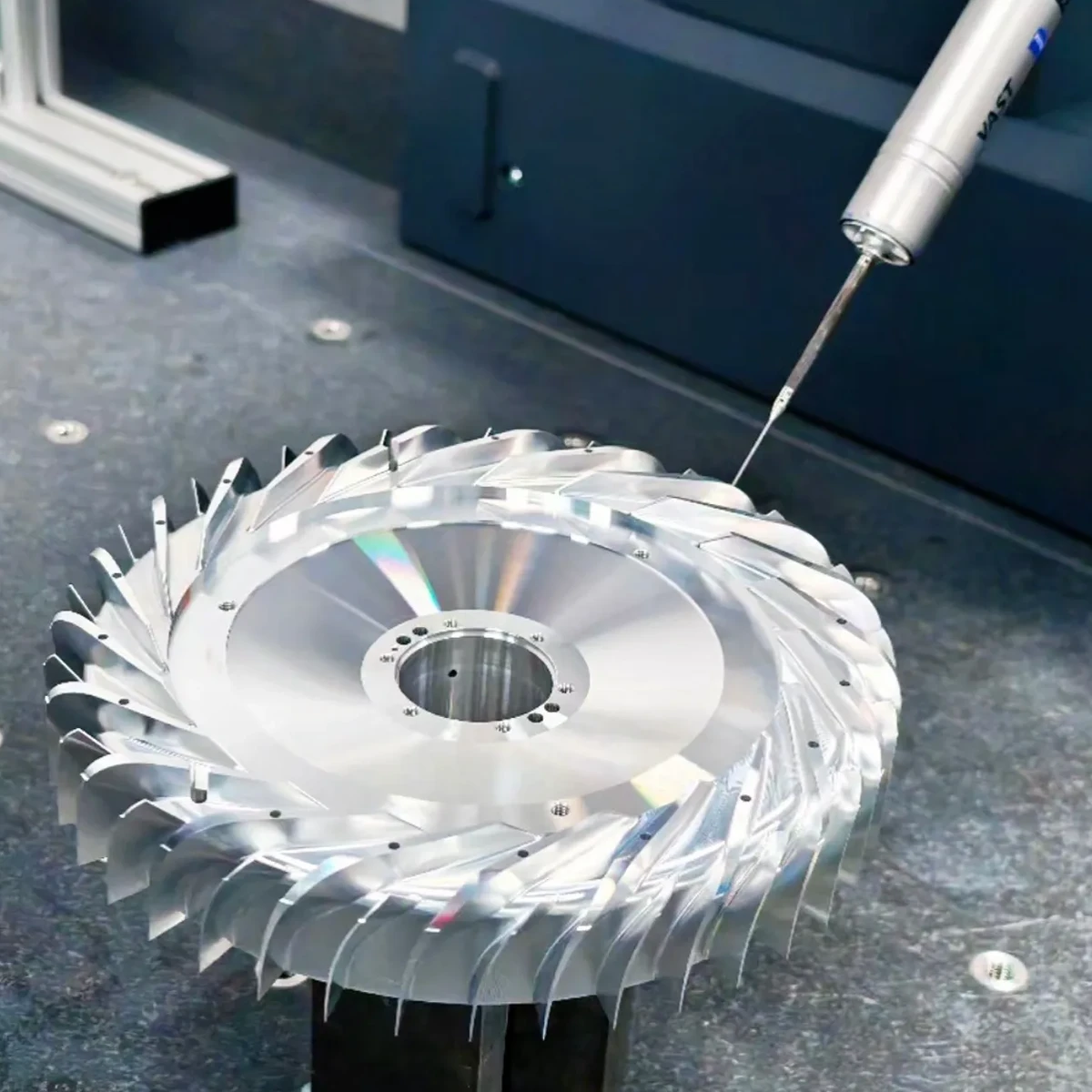
CNC Machining Services For The Aerospace Industry

Aerospace machining brings difficult materials, thin-wall geometry, tight tolerances and documentation requirements into one program. We machine structural components, fittings, housings and hardware with traceability, inspection planning and special-process coordination aligned to your drawing and flow-down requirements.

Jet engine fan blades and intake beside an aircraft fuselage on an airport apron

CNC Machining For The Aerospace Industry

Every aerospace component carries the same implicit requirement: it cannot fail. That shapes material selection, distortion control, tolerance planning, inspection, special processes and documentation.

We support aerospace OEMs, tier suppliers and MRO programs with structural brackets and fittings, actuation and hydraulic components, avionics housings, engine-adjacent hardware, cabin hardware and legacy replacement parts.

Flow-down clauses, material sourcing rules, special-process requirements, export-control instructions and required records must be supplied with the RFQ so compliance can be confirmed before quotation.

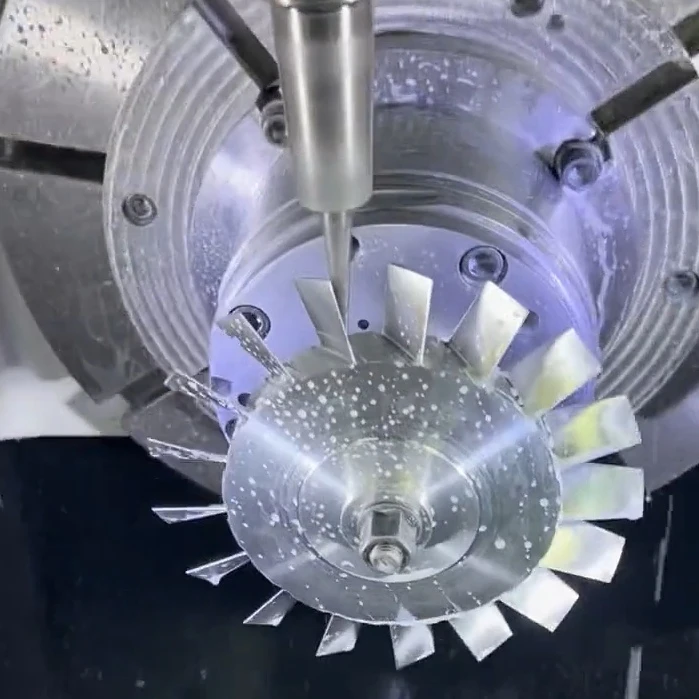
Milling tool machining the blades of a metal impeller held in a rotary fixture

Types Of Aerospace Parts We Manufacture

Aerospace components are planned around strength, weight, distortion risk, material traceability, finish requirements and documented release.

The Challenges Of Aerospace Parts Machining

Aerospace parts punish unplanned machining routes through distortion, tool wear, special-process failures and incomplete release records.

The manufacturing route is reviewed around material condition, wall geometry, datum structure, flow-down clauses and the documentation package required at delivery.

Thin Walls And Distortion Control

Stress-relieved stock, symmetric roughing, controlled fixturing and verification after unclamping help manage thin webs, pockets and large structural parts.

Post-Unclamp Verification
Flatness, position and profile are verified after machining stress has been released, not only while the part is clamped.
Manufacturing Processes For Aerospace Components

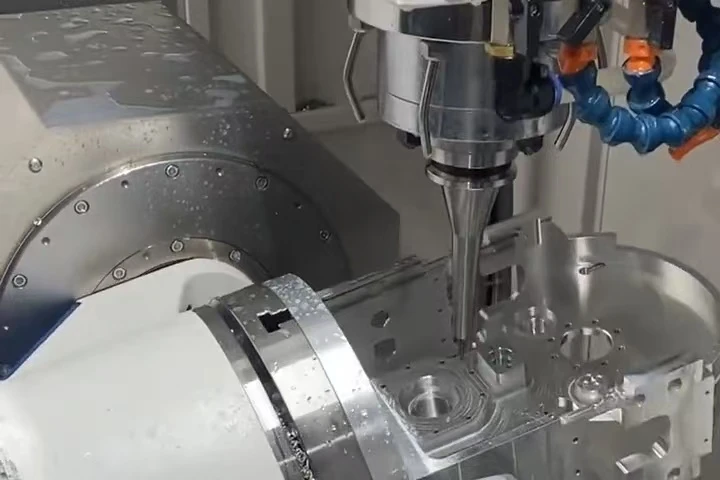
Our aerospace machining routes use mill-turn machining, Swiss machining, CNC turning and CNC milling, including 3-axis and 5-axis milling. Process selection follows the part geometry, material, datum structure and inspection requirements.

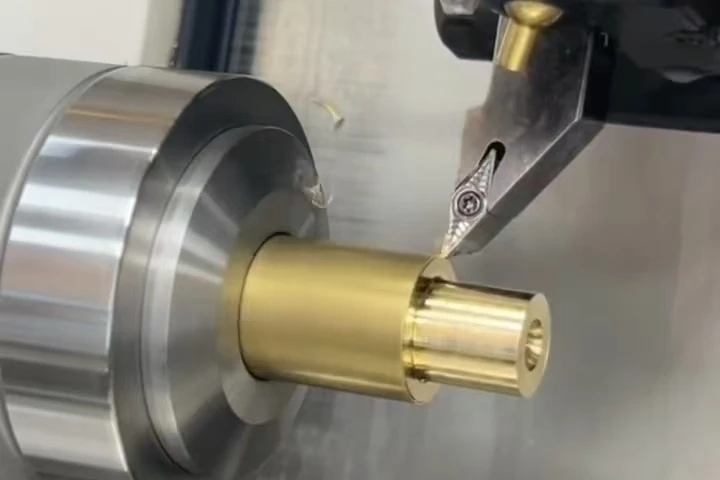
Mill-Turn Machining

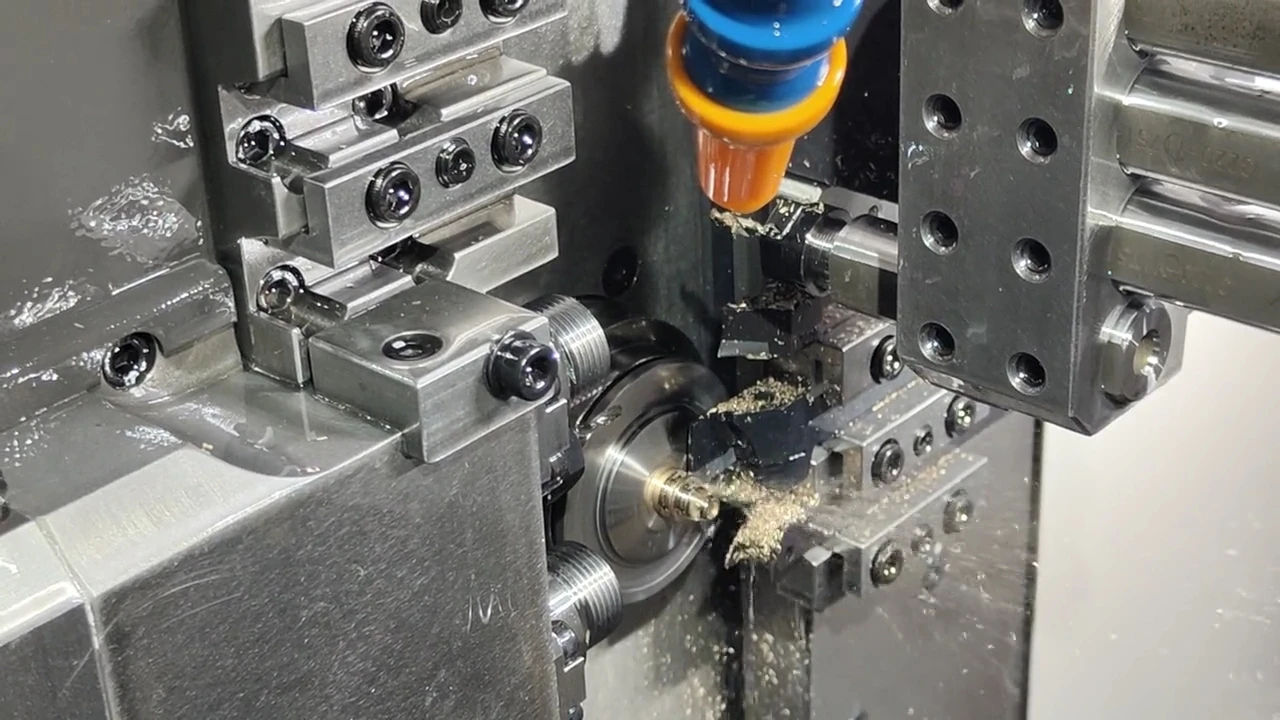
Combine turned diameters, bores and threads with flats, cross-holes and milled features on aerospace fittings, valve components and actuator shafts. Y-axis tooling and rear-side operations reduce transfers between machines and help maintain feature relationships.

  • Aerospace Fittings
  • Actuator Shafts
  • Cross-Holes And Flats
  • Turned And Milled Features
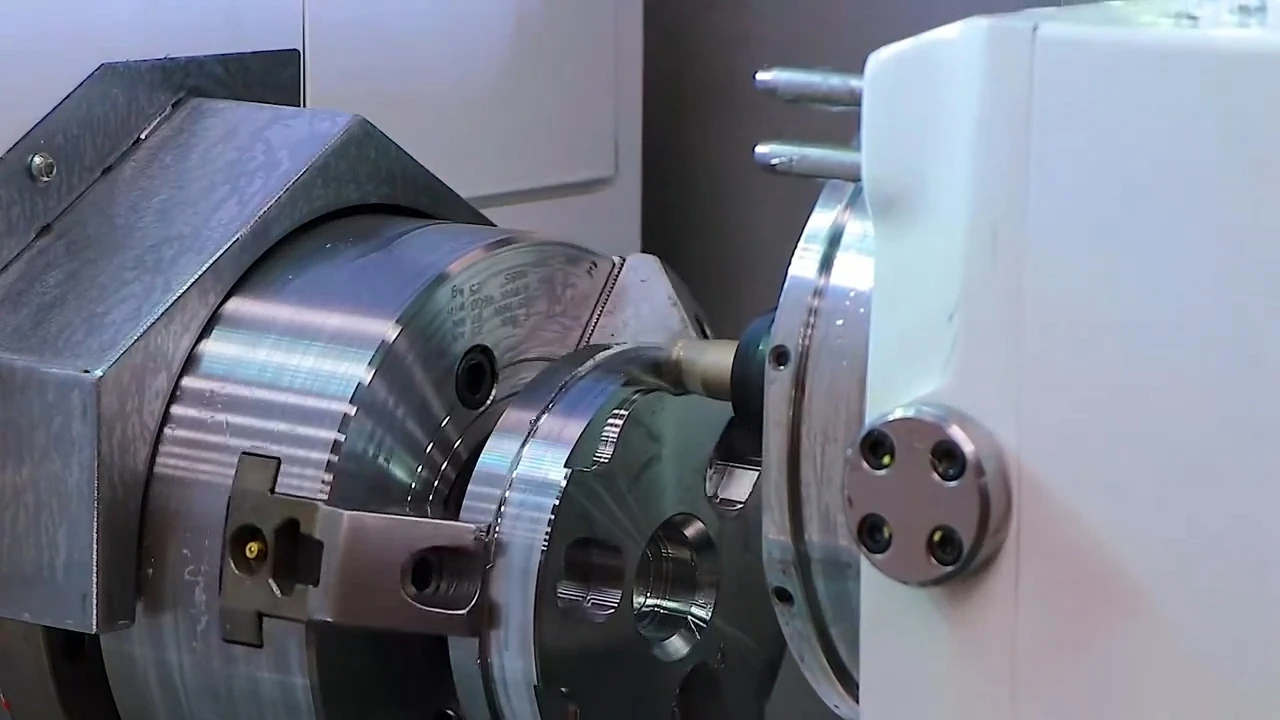
Mill-turn machining of a metal flange held in a chuck

How Our Aerospace CNC Machining Service Process Works

The sequence covers drawing and flow-down review, material sourcing confirmation, process planning, first article inspection, production machining, special processes, final inspection and complete release documentation.

Engineering Review

  1. 01

    Drawing Submission

    Provide the STEP model and dimensioned drawing with the current revision, material grade, quantity, surface finish, required delivery date and inspection requirements. Where required, an NDA is signed before drawings and models are exchanged.

  2. 02

    DFM Review

    Review geometry, dimensional and geometric tolerances, stock condition, tool access, workholding and measurement access. Identify features that affect machining feasibility, dimensional stability or inspection, and resolve proposed drawing changes with your engineering team.

  3. 03

    Technical Requirements Review

    Confirm the drawing revision, material specification, datum scheme, critical dimensions, surface finish and inspection requirements. Resolve drawing queries and document approved changes. Prepare the quotation from the confirmed part requirements, quantity and delivery schedule.

Production Preparation

  1. 04

    Aerospace CNC Machining Process Planning

    Define the operation sequence, machining datums, fixtures, cutting tools and cutting parameters. Prepare the NC program and inspection plan, review toolpaths through machine simulation, and establish the setup instructions for the first-article machining trial.

  2. 05

    Material Procurement

    Specified material grades and stock forms are purchased exclusively from approved or qualified suppliers, matched to the requirements of your drawing and purchase order.

  3. 06

    Incoming Material Inspection

    Check stock identification, dimensions, surface condition and material certificates against the specified grade, condition and purchase order. Record the heat or batch number and link the accepted material to the production work order.

Controlled Machining

  1. 07

    First Article Inspection

    Machine the first article using the planned NC program, fixtures and tools. Inspect drawing characteristics with the specified measurement methods, record the results and correct setup or program deviations before batch production begins.

  2. 08

    Production Machining

    Run the approved Aerospace CNC machining program with the documented fixture setup, tooling and cutting parameters. Maintain the specified datums and machining sequence, and record approved changes to programs, tool offsets or setup instructions.

  3. 09

    In-Process Inspection

    Measure critical dimensions and geometric characteristics at the intervals defined in the inspection plan. Monitor tool wear and dimensional trends, adjust offsets where appropriate, and recheck affected features after adjustment.

Verified Delivery

  1. 10

    Machined Part Inspection

    Check the completed machining operations against the drawing and review the in-process inspection results. Record dimensional conformity and segregate nonconforming parts before the batch proceeds to finishing or other subsequent operations.

  2. 11

    Post-Machining Operations

    Complete the specified deburring, grinding, polishing, surface treatment or heat treatment. Check treatment records and reinspect features affected by material removal, coating thickness or heat-treatment distortion.

  3. 12

    Final Inspection And Shipment

    Inspect finished parts against the drawing and final inspection plan, including dimensions, surface condition and finish requirements. Compile the required material certificates and inspection reports, verify quantity and identification, then pack parts to prevent damage during shipment.

Materials For Aerospace Components

Material grade, temper, source and certification requirements are confirmed before procurement. DFARS-compliant or domestic sourcing can be reviewed when specified with the RFQ.

Showing 4 Materials: Aluminum.

Aluminum 7075-T6

A primary structural alloy with high strength at low weight, commonly used for brackets, fittings and structural components.

Typical Applications

Airframe brackets, fittings and loaded structural parts

Aluminum 7050-T7451

A thick-section plate alloy selected where toughness and stress-corrosion resistance are important.

Typical Applications

Large structural plates and thick-section components

Aluminum 6061-T6

A general-purpose aerospace alloy for housings, interior hardware and non-primary structures.

Typical Applications

Housings, interior hardware and general aircraft components

Aluminum 2024-T3/T4

A fatigue-resistant airframe alloy for cyclic loading applications where specified.

Typical Applications

Fuselage, wing and fatigue-sensitive components

Surface Finishes For Aerospace Components

Aerospace finishing is managed to the supplied specification. Masking, thickness, conductivity, fatigue effects and process certifications are reviewed before release.

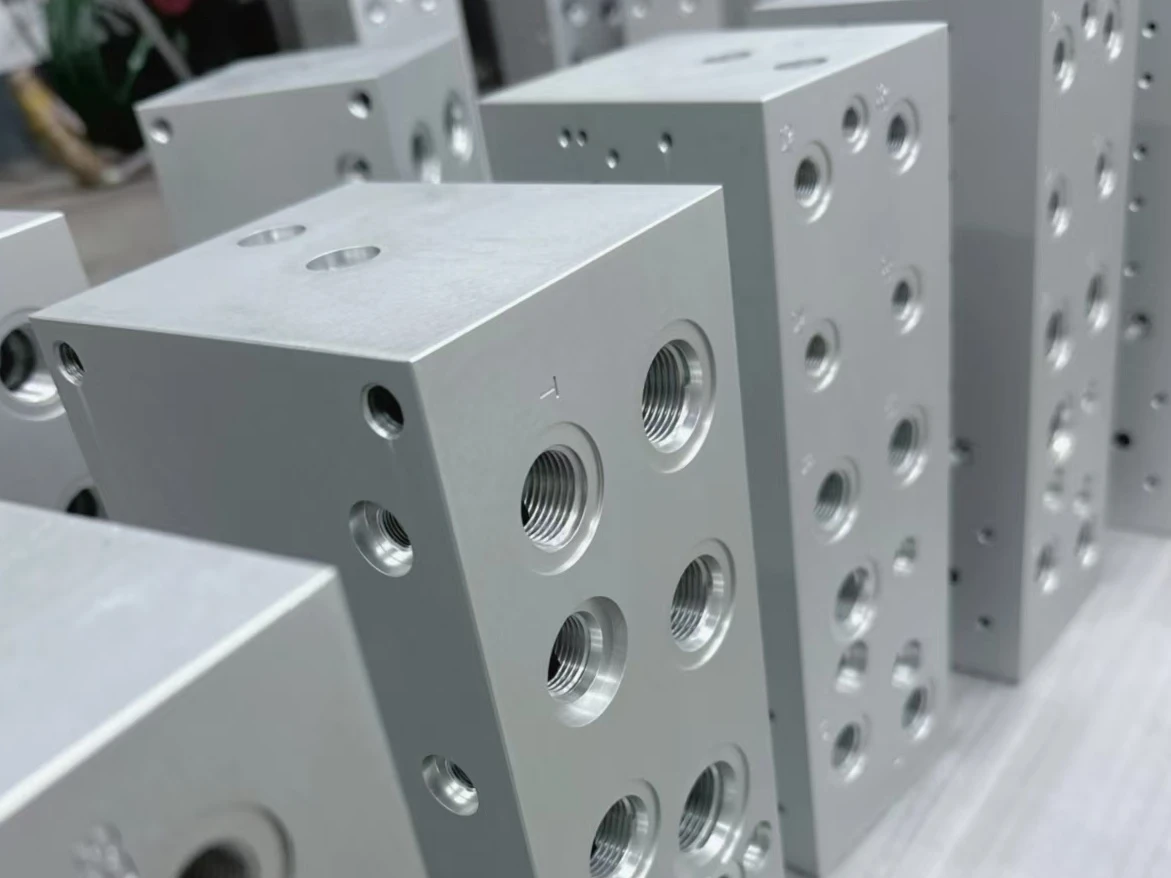
Natural-colored anodized metal blocks with threaded bores and side holes

Anodizing (Type II)

Natural or custom color per applicable specification

Sulfuric acid Type II anodizing supports corrosion protection and paint adhesion on aluminum. Clear natural or a custom dyed color is selected with the drawing requirements, masking and acceptance sample.

Typical Applications

Aluminum structures, brackets and housings

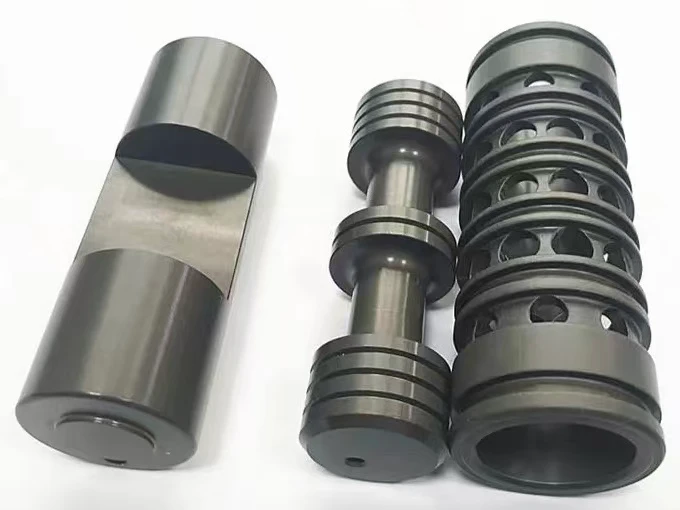
Dark hard-anodized cylindrical parts with grooves, shoulders and machined flats

Hard Anodizing (Type III)

Type III for wear surfaces

A dense oxide layer improves wear resistance where sliding or repeated contact is expected.

Typical Applications

Actuation components, guides and bushings

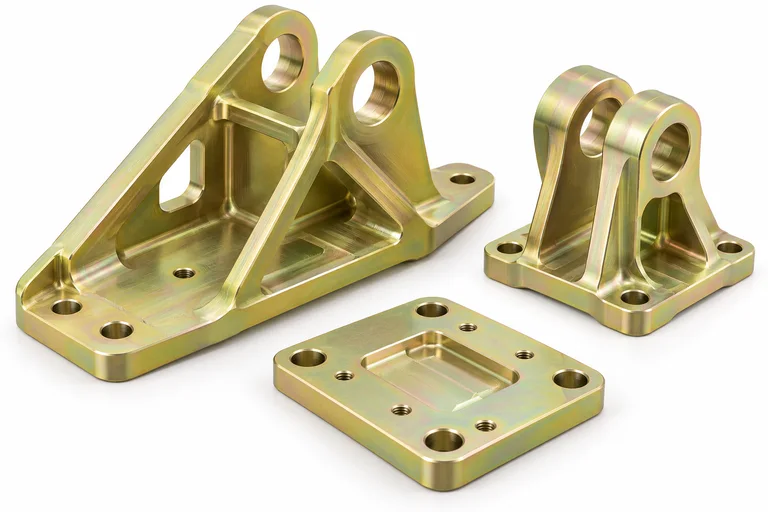
Conversion-coated aluminum brackets with a pale straw-gold metallic finish

Chemical Conversion Coating

MIL-DTL-5541 when specified

Conversion coating can provide corrosion protection with electrical conductivity on aluminum surfaces.

Typical Applications

Bonding surfaces, under-paint surfaces and conductive interfaces

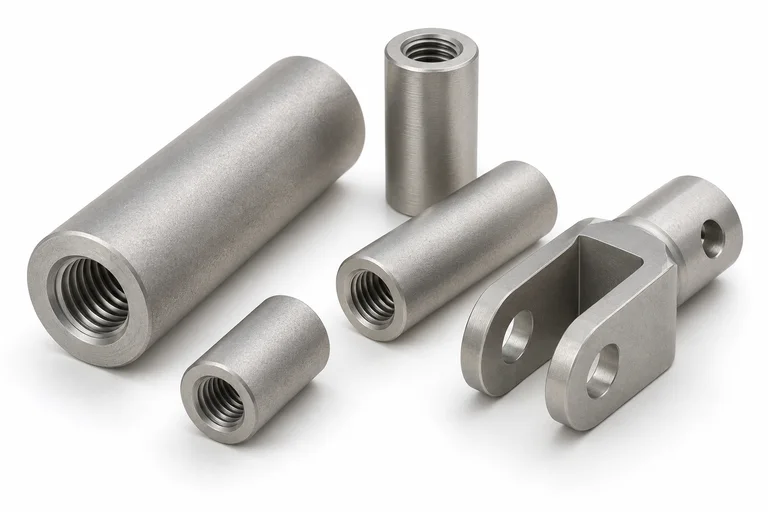
Cadmium-plated steel spacers and clevis with soft matte silver-gray surfaces

Cadmium Plating

Qualified supplier certification required

Cadmium plating may be specified for steel aerospace hardware where corrosion protection and lubricity are required.

Typical Applications

Steel fasteners and selected hardware

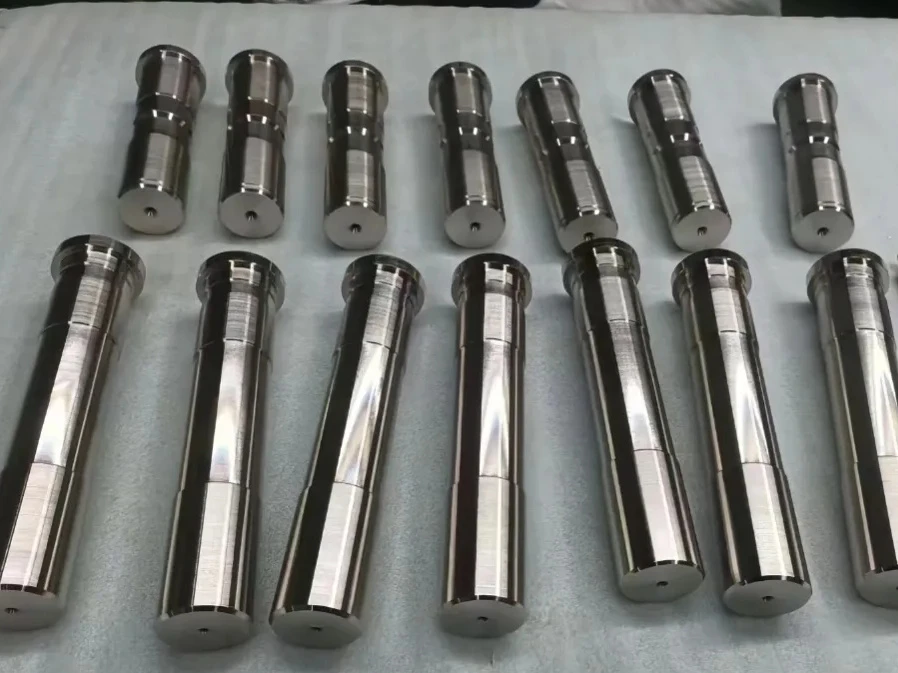
Nickel-finished metal shafts with stepped diameters arranged on a white sheet

Electroless Nickel Plating

Controlled thickness per drawing

Uniform plating can support corrosion and wear resistance across complex steel or aluminum geometry.

Typical Applications

Functional steel and aluminum components

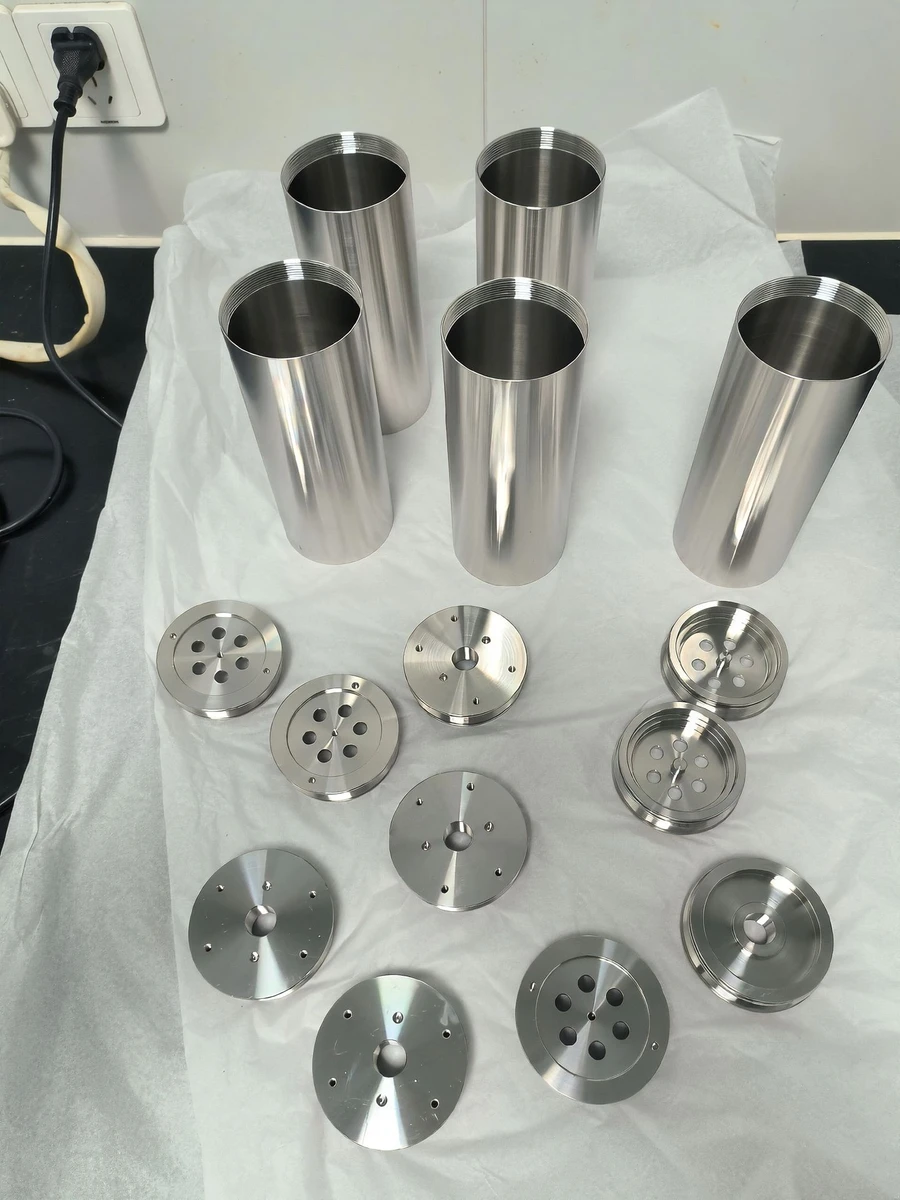
Stainless cylindrical housings and circular end plates arranged on a white sheet

Passivation

AMS 2700 when specified

Passivation restores stainless corrosion resistance after machining.

Typical Applications

Stainless fittings and hardware

Quality Assurance For Aerospace Programs

Aerospace quality assurance includes dimensional verification, material traceability, special-process records and delivery documentation that can be audited long after shipment.

Customer-specific clauses, AS9100 alignment expectations, ITAR or export-control handling and special records must be supplied with the RFQ for confirmation.

Why Choose Us For Your Aerospace Program?

Difficult materials, 5-axis structural geometry, documentation, low-volume economics and supplier coordination are handled as one manufacturing problem.

Difficult Materials Machined With Discipline

Inconel, titanium, 300M and PH stainless are quoted with the tooling, rigidity and cycle time they actually require.

5-Axis Structural Capability

Thin-wall pockets, compound angles and weight-optimized geometry are planned with distortion control built into the route.

Documentation Built Into The Job

FAI, material certificates and special-process records are assembled during the job rather than reconstructed after shipment.

Low-Volume Aerospace Fit

Prototype, spare and recurring low-volume production work can remain on one controlled manufacturing route.

Special Process Coordination

Qualified finishing, heat treatment, coating and NDT suppliers are coordinated under the agreed purchase-order scope.

Engineering Response

Complete RFQs receive an initial engineering response within one working day. Formal quotations follow review of materials, flow-down requirements, inspection scope and delivery timing.

Frequently Asked Questions

Practical answers about aerospace materials, AS9102 reporting, DFARS sourcing, thin-wall machining, special processes and MRO support.

What Aerospace Materials Do You Machine Most Often?

Aluminum 7075, 7050, 6061 and 2024; titanium Ti-6Al-4V; 17-4 PH and 15-5 PH stainless; 300M and 4340 steels; Inconel 718, Inconel 625 and A286.

Can You Provide AS9102 First Article Reports?

Yes, AS9102-style FAI packages with ballooned drawings can be provided when specified with the RFQ and purchase order.

Do You Support DFARS-Compliant Material Sourcing?

Yes, DFARS or domestic sourcing can be reviewed when specified in the RFQ, with country-of-origin documentation requirements confirmed during quotation.

Can You Hold Aerospace Structural Tolerances On Thin-Walled Parts?

Thin-wall feasibility is reviewed drawing by drawing. Stress-relieved material, symmetric roughing, controlled fixturing and post-machining verification are used where appropriate.

Do You Manage Special Processes Like Anodize, Plating And Heat Treatment?

Yes, special processes can be coordinated through qualified suppliers with certifications delivered as part of the agreed documentation package.

Can You Reverse-Engineer Legacy Or Discontinued Parts?

Yes, subject to review. Send the component, drawing or available documentation so material, dimensions and acceptance criteria can be agreed before release.

What Volumes Do You Support?

Single development articles, MRO spares and recurring low- to mid-volume production can be quoted.

Do You Sign NDAs And Handle Export-Controlled Work?

NDAs are available before file exchange. Export-control requirements must be identified at RFQ so handling can be confirmed.